Most people feel confused about when to get life insurance. The best time is usually earlier than you think, before you feel like you “need” it.
You need life insurance in place before a crisis happens, not after. Getting coverage in your 20s or 30s, or as soon as you have people or goals, depending on your income, can be one of the most impactful risk-management, protection, and financial decisions you make.
In this guide, learn who needs life insurance, how age affects cost and eligibility, which life events are typically good triggers to consider obtaining coverage, what to look for in a policy, and how a digital-first platform like Amplify can help you protect your family while supporting long-term financial planning goals.
Do I need life insurance?
Many people are unsure whether they truly need life insurance until they step back and consider who would be financially affected if they were to pass away. Life insurance replaces income, pays off major debts, and gives your family options, so you don’t accidentally force them into rushed decisions when it’s time to grieve.
Modern life insurance can also act as a way to build cash value on a tax-deferred and tax-advantaged basis under current tax law, which may be accessible during your lifetime, subject to policy terms, fees, and risks, for goals such as a home purchase, business funding, or supplementing retirement. It can function as both a safety net and a flexible planning tool.
Consider these questions:
- Do you have dependents (spouse, children, other family members, etc.) that rely on your income?
- Are there any concerns about future illness or hereditary conditions that may impact future eligibility?
- Do you have plans to start your own business, and may no longer receive life insurance benefits through an employer?
- Are you currently paying off or helping a family member pay off debt, such as a mortgage or student loans?
- Would you like the option to consider policies that may build long-term, tax-advantaged cash value (depending on funding, costs, and performance) you can tap later for achieving major goals?
If you answered yes or maybe to any of the above questions, then life insurance may be worth considering as part of a broader financial discussion.
What’s the best age to get life insurance?
The best time to get life insurance is typically when you are younger and in good health, often in your 20s or early 30s. At that stage, it is usually easier to qualify for larger coverage amounts at lower monthly costs, and you can establish coverage earlier, which may result in lower costs, depending on the product and underwriting.
Starting earlier can also create more flexibility. You can begin with an affordable policy that fits your current budget and then adjust or layer coverage as your income and responsibilities grow, rather than trying to compress that planning into a later, more expensive stage of life.
Reasons why buying young is powerful:
- Rates are generally lower for younger, healthier applicants, which can mean more coverage for each dollar of premium.
- Certain policies, such as level-premium term insurance, can offer predictable premiums for a defined period, so you’re less exposed to future health changes.
- You're more likely to qualify for preferred health classes and fewer exclusions when you apply before chronic conditions appear.
If you are in your 40s, 50s, or beyond and have not yet secured coverage, it can still be worthwhile. You may pay more than you would have at a younger age, but you can still protect a partner, support children, cover a mortgage, or use certain policies in broader retirement and legacy planning.
When do people typically get life insurance?
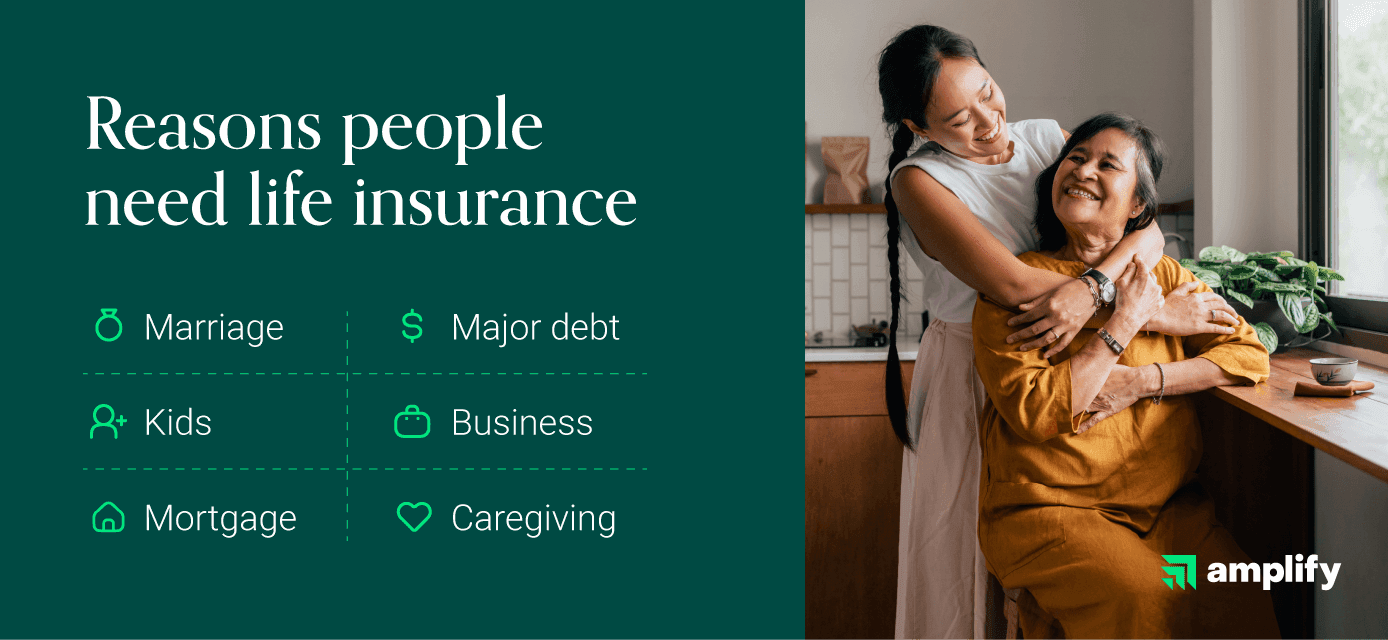
Many people purchase life insurance around major life events, such as getting married, having children, and starting a new business. These events tend to highlight how much others depend on their income and decisions, and how disruptive it would be if that support suddenly disappeared.
Here are some signs that it may be time to put coverage in place rather than continuing to wait.
1. Getting married
Marriage often means shared housing costs, joint savings plans, and coordinated retirement goals. Life insurance helps ensure that if one partner passes away, the other doesn't suddenly become responsible for all expenses.
A policy can help cover daily living costs, pay down shared debts, and give your spouse time and space to adjust, rather than needing to sell a home, change jobs quickly, or use savings just to keep up.
2. Having children
Children often shift their focus from life insurance as a “later” topic to an immediate priority for new parents. A child changes the financial picture over decades, from basic living expenses to education and early adulthood support.
Life insurance can replace income, fund childcare, and keep long-term goals on track even if a parent is no longer there. It can also support intentional legacy planning, such as setting up resources for education, a first home, or a financial foundation.
3. Buying a home
A mortgage is one of the largest commitments many households take on. If you pass away, the mortgage generally continues, and the person sharing that home may be responsible for payments alone.
Life insurance can be tailored to help pay off the mortgage or fund years of payments. That gives your loved ones the ability to stay in the home, sell when it makes sense, or incorporate the property into a broader plan without pressure from the lender.
4. Taking on debt
Other types of significant debt, such as private student loans with co-signers, business loans, or large personal loans, can affect your family if you die. If you're early in your career or making a career change with private student debt that a parent or relative co-signed, your passing could leave them responsible for the full balance.
A correctly set up life insurance policy can provide funds to clear or reduce these balances. That reduces the risk that debt falls on people who never expected to shoulder it alone.
5. Starting a business
Business owners and entrepreneurs often have a mix of personal and business risk. There may be partners, employees, business lenders, or family members who rely on the business's success.
Life insurance can protect both your household and your company. It can support buy-sell agreements, provide liquidity for partners to carry on, or help your family maintain or transition the business without having to accept unfavorable terms.
Amplify’s founder, Hanna Wu, used her own policy's cash value to expand her business. Of course, as we never get tired of saying (because it’s the right thing to do), results vary based on policy design, funding, loan activity, and market performance, and are not guaranteed. But Hanna watched her balance continue to grow even after borrowing. Amplify is built to make these planning strategies accessible to entrepreneurs and families who've been left out of the wealth game for too long.
6. Becoming a caregiver
If you support aging parents, a disabled partner, or another family member, your income and care are central to their quality of life. Losing that support can create serious emotional and financial strain.
Life insurance serves as one part of a comprehensive long-term care strategy, helping ensure that housing, medical costs, and daily support can continue even if you are not there to coordinate or fund them.
Key considerations when choosing a life insurance policy
Once you decide that it is time to get life insurance, selecting the right policy becomes the priority. Several practical factors can guide that decision so the coverage matches your real needs.
Key considerations include the type of policy, the coverage amount, any existing coverage you already have, and your health and lifestyle.
- Policy type: Decide whether you want coverage for a set period or for life. Term life often offers more coverage per dollar for a specific time frame, while permanent life can combine lifelong coverage with potential tax-advantaged cash value accumulation, depending on policy terms and funding.
- Coverage amount: Estimate how much income you would like to replace and for how long, and consider which debts or goals you want to fund. Many households begin with a multiple of their annual income and then adjust it based on mortgage payments, childcare costs, college plans, and retirement needs.
- Existing coverage: Employer life insurance is helpful, but it may not be portable and may not offer enough protection for your whole plan. Owning your own policy means you are not tied to a specific job for your family’s security.
- Lifestyle factors: Your age, health history, and certain activities can influence both eligibility and cost. Applying before major health issues appear or before high-risk activities begin can help secure better pricing and fewer limitations.
What type of life insurance do you need?
Different life insurance policies exist because people have different priorities. Some focus primarily on income replacement for a set number of years, while others aim to combine protection with long-term financial planning.
- Term life insurance: Provides coverage for a specific period, such as 10, 20, or 30 years. People often use it to cover the years when children are at home or when a mortgage or other large obligation is in place. Premiums are typically lower compared to permanent coverage for the same death benefit.
- Permanent life insurance with cash value: Lasts for life and builds cash value over time with options like IUL life insurance. The cash value feature could grow tax-deferred (under current law), and may be available to you through loans of withdrawals for major goals, such as retirement income, a home purchase, or business capital, while the death benefit remains in place as protection for your beneficiaries. Depending on your circumstances and the way the withdrawals are structured, benefits may be reduced and you may incur tax consequences, so it’s important to consider everything carefully.
- Hybrid or combination strategies: Many families use combination insurance, a mix of term and permanent coverage. For example, term life can handle large, time-bound needs, while permanent life focuses on long-term wealth building through careful financial planning and considering protection objectives, tax-advantaged cash value, and legacy planning.
How to get life insurance
The process of getting life insurance can be straightforward when you break it into clear steps. A guided, online experience can make each step easier to understand and complete.
You can think of the process in five stages, from clarifying your needs to activating your policy.
- Clarify your goals and budget: Identify who and what you want to protect, then decide on a comfortable monthly or annual premium range.
- Estimate your coverage need: Use a coverage calculator or guided tool to determine an appropriate death benefit amount based on income, debts, dependents, and future goals.
- Select a policy type and term: Decide between term, permanent, or a combination, and choose a term length, if needed, that aligns with major milestones, such as paying off a mortgage or helping children through college.
- Complete your application: Provide information on your health, lifestyle, and finances. You can complete many applications online with clear explanations for each section.
- Review your offer and activate coverage: After approval, review the policy details carefully, confirm the coverage amount and premium, and begin coverage by paying your first premium.
Amplify rebuilt the life insurance experience to be digital-first, guided, and transparent. You can explore options on your terms, see scenarios in plain language, and move from curiosity to coverage with less friction.
The time is now with Amplify
If you’re thinking seriously about your family, your home, or your long‑term financial plans, that is usually the moment life insurance moves from “someday” to “now.” Getting covered before your health or age starts working against you may help keep costs lower and options wider, depending on health and underwriting.
Amplify makes it simple to take that next step with a transparent and guided digital experience. Explore indexed universal life policies and find the right coverage for you and your family.