Viewing life insurance as a "just in case" plan for the end of life is common, but it can actually be a versatile financial tool for various stages of life.
Many people will naturally answer the death benefit when asked what life insurance is used for, as it’s a foundational part of life insurance basics. This benefit may play a role in replacing lost income or funding a child’s education, but young, healthy individuals without dependents may believe they don’t need to use this tool to establish coverage.
However, modern life insurance has evolved into much more than an after-death financial safety net. Certain policies may serve as financial planning tools, play a role in building tax-advantaged wealth, and provide "living benefits" to policyholders, subject to policy terms and costs.
Discover how life insurance can offer you protection and opportunity at the same time in this guide.
What is life insurance?
Life insurance is a contract between you and an insurance provider, where, in exchange for premium payments, the insurer agrees to pay a death benefit to your named beneficiaries when you pass away, subject to policy terms and conditions.
However, modern life insurance policies may play a role in balancing protection for your family with the opportunity to build tax-advantaged wealth over time while you're still living. While most people haven’t heard of using a policy this way, it can be a flexible vehicle for your financial future, subject to policy charges and performance.
How does life insurance work?
While every policy is unique, life insurance typically includes establishing coverage, paying premiums, accumulating value, and accessing benefits. Here's a more in-depth review of every step of the process:
- Establish coverage: Choose a policy type and a death benefit amount that fits your goals.
- Pay premiums: Make regular payments to the insurance company to keep the policy active.
- Accumulate value: In certain permanent policies, a portion of your premium may be allocated to a cash value component, subject to the policy's terms.
- Access benefits: After your death, the insurer pays the death benefit to your beneficiaries. Depending on your policy terms, you may also be able to access the accumulated cash value during your lifetime.
It’s important to remember that using a life insurance loan to access your cash value could reduce the final death benefit and may involve specific policy charges or tax implications if the policy is not managed correctly.
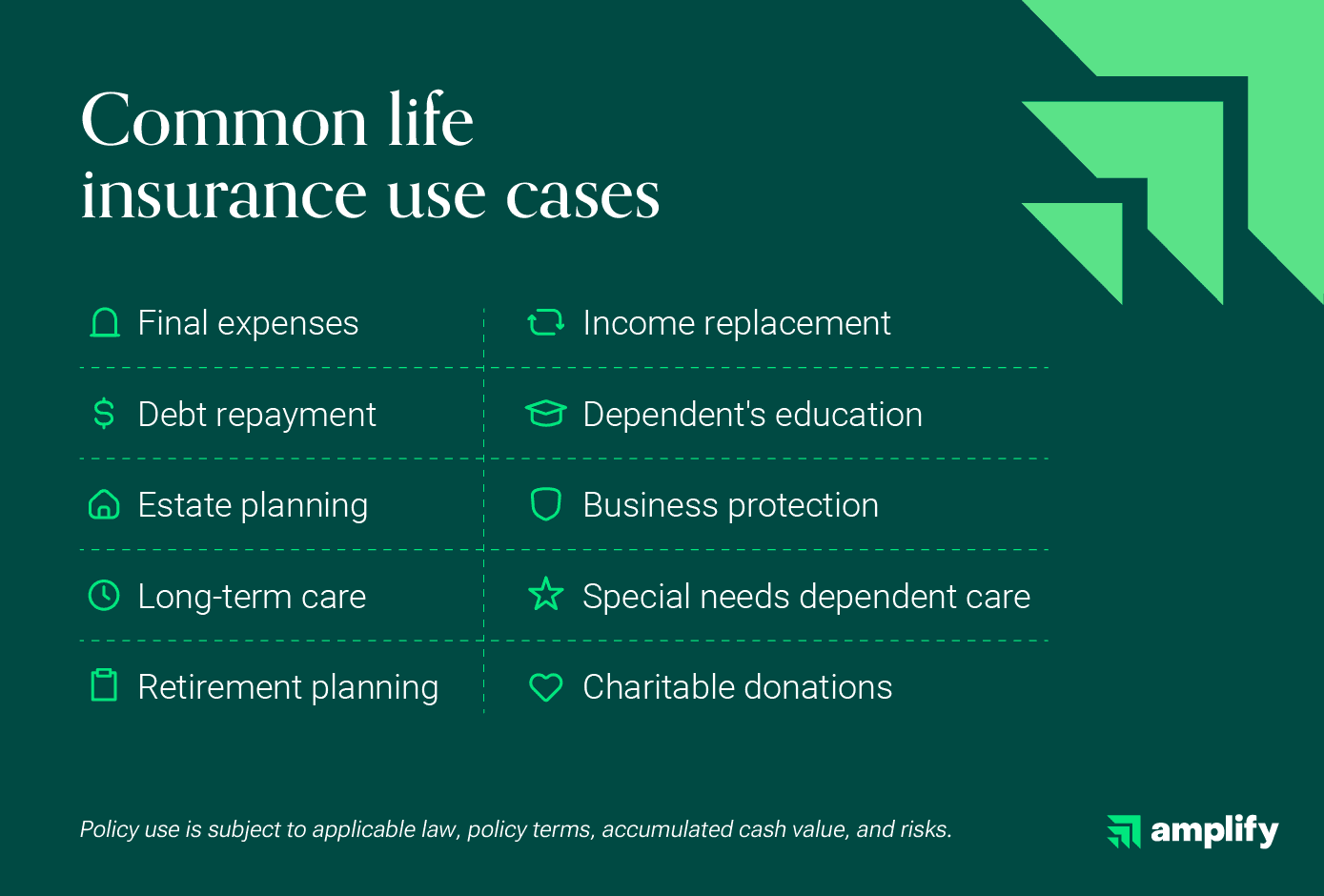
11 reasons to get life insurance
Whether you're establishing coverage earlier in life or making protection decisions for your family, the right life insurance policy may provide you with diverse financial assistance. Here are 11 reasons why you may choose to establish a life insurance policy:
1. The death benefit
The death benefit is the core of any policy, and it serves as the foundation for other living benefits. While the primary purpose of this benefit is to provide a payout to your loved ones upon your death, policies may also include features like accelerated death benefits.
This feature is designed to allow you to access a portion of the death benefit during your lifetime if you are diagnosed with a qualifying chronic or terminal illness, subject to policy terms and health requirements. This can be your protection and your opportunity — at the same time — providing financial support when you might need it most.
2. Replace lost income
For many families, a monthly paycheck is what keeps everything running. If that income were to disappear, it could create an immediate financial gap. Life insurance may help bridge that gap by providing a lump sum to your family that could cover daily living costs like groceries and utility bills. It’s a way to help maintain their current standard of living even during a difficult transition, provided the policy remains in force.
3. Pay off debts
Major financial obligations don't always disappear when you pass away. Life insurance could play a role in managing your debt so it doesn't fall on your survivors, covering items like:
- Mortgage payments
- Car loans
- Personal credit lines
By specifying a death benefit that covers your total liabilities, you can help beneficiaries keep their assets without the burden of unpaid balances.
4. Funeral and final expenses
End-of-life costs can be surprisingly high, consisting of medical bills, funeral services, and other expenses. Life insurance can be used to specify funds for these exact costs, which may play a role in preventing your family from having to dip into their savings or take on new debt during an emotional time. However, payment of the death benefit is subject to the policy's continuation and terms.
5. Funding children's education
Family life insurance may offer unique options for college planning. As some permanent policies allow you to accumulate cash value over time, you may be able to borrow from your policy to fund items like tuition or housing for your child, subject to policy terms, costs, and accumulated cash value.
Unlike some education-specific accounts, there are typically no restrictions on how to use life insurance funds for college planning — giving your child a head start at university, trade school, or some other institute, provided the policy remains in force.
6. Estate planning and wealth transfer
Life insurance policies may act as a vehicle for building generational wealth, as the death benefit is generally tax-advantaged for beneficiaries. These policies may play a role in simplifying wealth transfers designed to provide your loved ones with immediate liquidity that could cover estate taxes or simply build on the foundation you’ve created.
7. Business protection
If you are a business owner or have self-employed life insurance, your personal and professional finances may be intertwined. With a life insurance policy, you can help play a role in supporting your business if a partner passes away. Additionally, these policies are designed to provide capital that could help surviving partners buy out a deceased partner’s shares, which may prevent the business from being sold to outside parties during a transition.
8. Retirement savings
Even if you've never heard of using life insurance as a supplement to your retirement, certain permanent policies may also act as wealth accumulation tools. When comparing IUL and 401(k) accounts, life insurance offers unique benefits, such as downside protection and tax-advantaged withdrawals, though it is important to carefully consider the costs and benefits of either vehicle.
To get the most out of your retirement plan, establishing a life insurance policy early may give the cash value more time to grow. Later in life, this permanent policy may serve as retirement income, allowing you to access funds to supplement your needs. However, it's important to remember that growth is subject to policy charges and caps, and maintaining the policy is essential to avoid potential tax implications.
9. Supporting special needs dependents
Providing for a loved one with special needs requires a strategy that looks far into the future. Life insurance can play a role in this by specifying a death benefit that may fund a special needs trust. This approach is designed to give your dependent the resources needed for their care and quality of life, potentially without jeopardizing their eligibility for government benefits, subject to applicable law and proper trust structuring.
10. Long-term care
As you age, it may be a viable option to use life insurance to cover health-related costs. Certain policies offer long-term care riders designed for you to access a portion of your death benefit for home care or assisted living costs. These senior life insurance features may provide additional resources to help cover rising healthcare costs, subject to policy terms and health qualifications.
11. Charitable donations
Using life insurance for charitable giving is one way to make the most of your policy. By naming a nonprofit organization as a beneficiary, you could leave a much larger gift than you might be able to donate outright during your lifetime. This strategy is designed to provide a tax-advantaged way to support a cause you care about, allowing your legacy to extend beyond your immediate family.
Types of life insurance policies
Choosing the right policy depends on your financial goals and the length of protection you need. While there are many options, they generally fall into two categories: temporary coverage and lifelong protection.
*Subject to policy terms, including the maintenance of sufficient cash value and required premium payments.
Term life insurance
Often considered the most straightforward and affordable life insurance coverage, term life insurance is designed to provide a death benefit for a specific period, such as 10, 20, or 30 years. Amplify offers term life policies that may offer an expedited underwriting process, depending on eligibility.
Permanent life insurance
Unlike term life insurance, permanent life insurance is designed to provide lifelong protection, provided the policyholder pays the required premiums. These policies include a cash value component that allows you to specify a portion of your premium toward a tax-advantaged vehicle that could grow over time.
Whole life is the most traditional form of permanent coverage, offering fixed premiums and a set death benefit. However, additional wealth-building permanent policies, such as the indexed universal and variable universal policies discussed below, offer greater flexibility in how you fund the policy and how the cash value may grow.
Universal life insurance
Universal life (UL) insurance — including indexed universal life insurance (IUL) — policies offer flexible premiums with permanence. These policies can be:
UL policies may allow you to adjust premiums and death benefits as needed, with IUL policies featuring a floor to protect against market index losses (though policy fees and charges may still erode cash value) and a cap on gains.
Variable life insurance
Variable universal life (VUL) policies allow you to invest your cash value in sub-accounts that function similarly to mutual funds. Since VUL policies experience direct market exposure, they may offer higher growth potential and higher cash value reduction risks if the market drops.
How to choose the best life insurance for you
Selecting the right coverage is about aligning a policy’s features with your current reality and future aspirations. When to get life insurance depends on your unique situation, but considering these key factors may play a role in finding the right fit:
- Income: A policy may play a role in replacing your income after your death, so choose a policy with sufficient coverage to maintain your beneficiaries' standards of living.
- Long-term goals: For tax-advantaged growth or retirement supplementation, a permanent policy is designed to support a long-term strategy, while term insurance may be better for temporary protection.
- Health conditions: Your health and family medical history may affect your premium costs and the types of policies available to you. Establishing coverage earlier in life could make the process more accessible.
- Existing debt: Totaling your mortgage, student loan, and credit card balances may allow you to specify the right death benefit amount.
- Budget and flexibility: Determining how much you can comfortably afford to pay in premiums — whether fixed costs or more flexible options — may play a role in maintaining the policy over time without straining your finances.
Use insurance to Amplify your life
Life insurance is a versatile financial vehicle for both now and the future. The right policy is designed to offer protection and opportunity at the same time, whether you focus on safeguarding your loved ones’ financial future or building a tax-advantaged strategy for wealth accumulation.
From simple term coverage to the growth potential of IUL policies, you don't have to navigate your options alone. By speaking with an Amplify agent today or getting an estimate on the website, you can take a proactive step toward a more secure and flexible financial future, subject to policy terms and required premiums.
Note
This content is for general informational and educational purposes only and does not constitute financial, tax, legal, or investment advice. Life insurance policies contain fees, expenses, limitations, and exclusions, and policy features vary by carrier and state.
Life insurance is primarily designed to provide a death benefit. While permanent life insurance policies may accumulate cash value, they are not intended to replace traditional investment accounts. Cash value growth is not guaranteed and depends on policy terms, charges, insurer crediting practices, and, where applicable, investment performance.
Accessing cash value through loans or withdrawals will reduce policy values and death benefits and may increase the risk of lapse. Policy loans accrue interest. If a policy lapses or is surrendered with an outstanding loan balance, taxable income may result. Policies classified as modified endowment contracts (MECs) are subject to different tax treatment, including potential taxes and penalties on distributions.
Indexed universal life insurance (IUL) credits interest based on index performance, subject to caps, participation rates, spreads, and insurer crediting methods. While index-linked strategies typically include a minimum crediting rate, policy values can decline due to charges, loan activity, or insufficient premiums.
Variable universal life insurance (VUL) involves investment risk, including possible loss of principal. Investment returns and policy values are not guaranteed.
Tax treatment depends on individual circumstances and current law, which may change. Individuals should consult their own qualified financial, tax, and legal professionals before making decisions regarding life insurance.